

Dear friends:
November 2026 offers a lot for us to ponder. We have witnessed a major shift in the political balance across the nation, which leads to the question, what’s next for Americans, for the Church, and for the world? We see Holy Father Pope Leo on tour to South America where he emphasized an awakening of faith, a welcoming church, and a just and fraternal society, key messages that resonate for all the faithful. November 13 marked the 144th anniversary of Cardinal Joseph Cardijn's birth who dedicated his life to the working people. The articles in this newsletter and upcoming events touches on all of these themes, reminding us that we are in community and that we have a role to play as people of Catholic Action!
Interested in getting involved? Contact cardijnassociates@gmail.com
Cardijn Associates wishes all a Happy Thanksgiving with family and friends!
*** Special Announcement ***
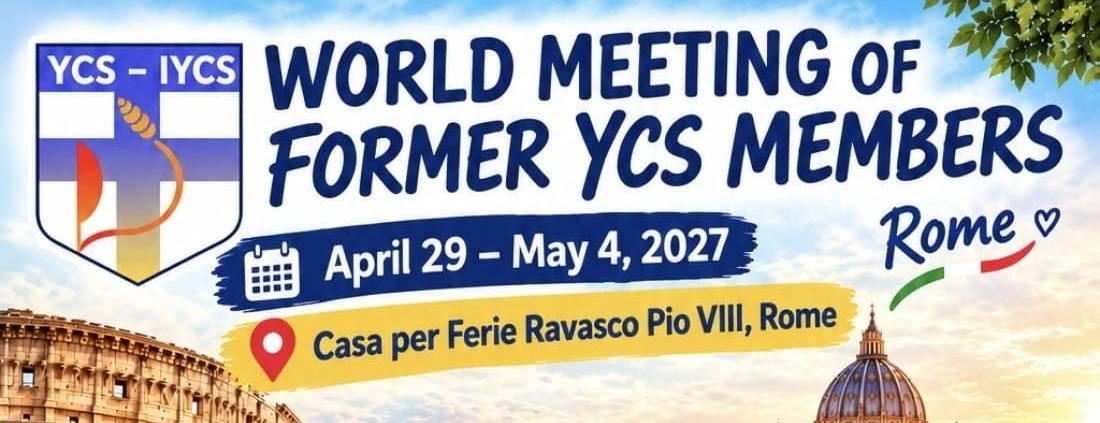
FORMER YCS MEMBERS — WORLD GATHERING IN ROME 2027
The 4th World Meeting of Former YCS Members seeks to build a renewed understanding of alumni identity and mission and a shared sense of what it means to remain connected to YCS after the student years and how former members can live their vocation today.
Economy must serve the person: Pope Leo
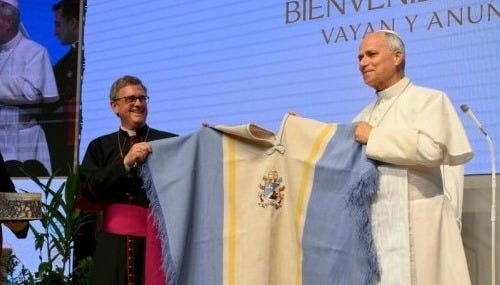
Addressing representatives of social movements and the world of labour in a speech at the Catholic University of Argentina, Pope Leo insisted that the economy must be at the service of the person, and not the person at the service of the economy.
“All work, and every aspect of the work community, must always bear this distinctive mark: it must be carried out by people, who bring all their potential to bear, and it must likewise be directed toward the full development of those who perform it,” Pope Leo said. “Here we encounter the first and most fundamental of the principles of the Church’s Social Doctrine: the dignity of the human person. The human person is the author, the centre and the goal of all economic and social life.”
Economy must serve the person: Pope Leo
The JOCist roots of Vatican II and synodality in Argentina
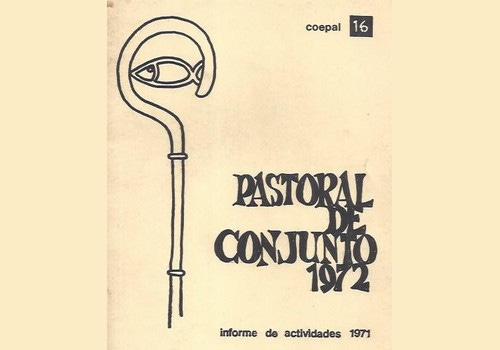
The reception of Vatican II in Argentina is inextricably linked to the history of COEPAL (Episcopal Commission for Pastoral Care), a body created in 1967 by the national Conference of Bishops to apply the conclusions of the ecumenical Council to the Argentine Church. Initially, it was supposed to be composed exclusively of bishops.
From the outset, however, and in the spirit of the Second Vatican Council, the Argentine bishops sought to include representatives of the secular clergy, religious orders, and laity — both men and women. This inclusion was groundbreaking for the time — not just in Argentina, but worldwide.
This collegial — today we would call it synodal — spirit was described by Fr. Gerardo Farrell, COEPAL’s coordinating secretary, as follows: “In close collaboration, bishops … representatives of religious men and women, lay people, and periti engaged in extensive dialogue, consultation, planning, and execution.”
This parity among clerics and lay people (and between men and women, who were well represented among regular clergy and laity) went beyond the practices of the Council itself, where only bishops held the right to vote, and foreshadowed the Synod on Synodality’s voting system nearly sixty years in advance.
Claudio Remeseira, Synodality avant la lettre: Argentina’s Pastoral Roots (Where Peter Is)
Claudio Remeseira, Leo in the land of Francis (Where Peter Is)
Servant of God John McKniff, jocist priest who inspired Pope Leo
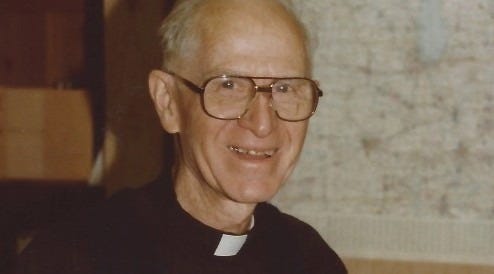
Servant of God Father John J. McKniff, O.S.A. (1905–1994) was an Augustinian missionary whose life was marked by extraordinary faith, perseverance, and love for the poor. A beloved pastor, educator, and mentor to Pope Leo XIV, Fr McKniff is remembered for his missionary zeal, deep spirituality, and unwavering commitment to the people he served.
He was a man of deep spirituality and is remembered particularly for his devoted pastoral ministry to the poor in Cuba and in Peru.
Father McKniff served most of his adult life as a missionary in Peru, Cuba and the Philippines. In Cuba, he founded YCW and Catholic Action groups. A member of the Augustinian Villanova Province, he worked closely with Augustinians of the Midwest during his years in Peru.
The Cause for Fr. John J. McKniff, O.S.A. (Augustinian Province of Villanova)
John J. McKniff, O.S.A., Augustinian Missionary and Pastor of the Poor (Midwest Augustinians)
St. Francis, Cardijn and the prophetic periphery
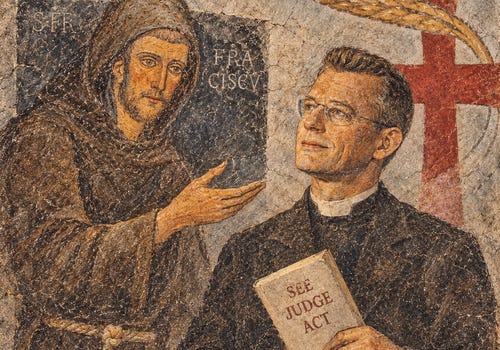
Having just completed a thirteen-day walking pilgrimage from Assisi to Rome, writes Stefan Gigacz, St. Francis has naturally been at the front of my mind, particularly his underappreciated yet profound influence on Joseph Cardijn.
As Marc Walckiers observed in his 1981 doctoral study, Joseph Cardyn, Jusqu’avant la fondation de la JOC, the Poverello’s example was significant – perhaps even decisive – for Cardijn as a seminarian and young priest:
During his first year at the grand séminaire of Malines (1902–1903), Cardyn’s literary interests began shifting toward moral and spiritual development. His growing devotion to Saint Francis of Assisi and Saint Teresa of Ávila reflected his deepening focus on personal piety, asceticism, and a spiritual dedication to the poor.
St Francis, Cardijn and the prophetic periphery (Cardijn Research)
The coal cart in Halle
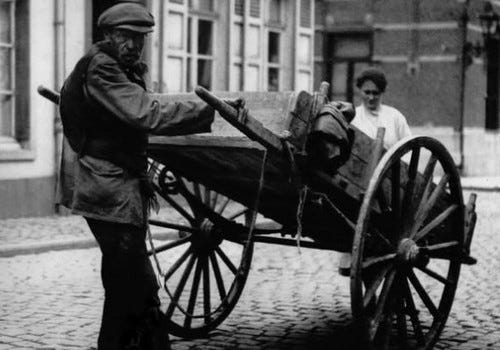
Not long after May 1891, in Halle, a market town southwest of Brussels, a nine-year-old boy read a papal encyclical aloud to his father, writes Richard Pütz. The father could not read or write. He kept a small coal store, first with a handcart and later with a horse-drawn wagon that hauled coal from the station and the canal boats. The boy helped unload the coal, and as soon as he could write, he made out the invoices.
The document was Rerum Novarum, Pope Leo XIII’s letter on workers’ conditions. A man who hauled coal for a living wanted to hear what Rome had to say about men like him.
A few years later, the same boy crept down to the kitchen one night, barefoot and in his nightshirt. His parents expected him to start an apprenticeship. Instead, he asked to stay in school and study for the priesthood. The business was failing, and his father was already exhausted. The father said yes anyway, telling his wife that if they could give a son to God, “we’ll work on a bit more.”
Joseph Cardijn left for the seminary at Mechelen in September 1897.
The prayer that begins with ‘Our’ (Cardijn Reflections)
What Kind of King? asks Fr Chris Malano CP
Most of us have some influence: at work, at home, among friends, in our parish. How we use it shows which king we are following, Fr Chris writes.
On the feast of Christ the King, the Gospel shows a king who puts himself in the place of the hungry, the stranger, the sick, and the prisoner. His royal title was nailed to a cross.
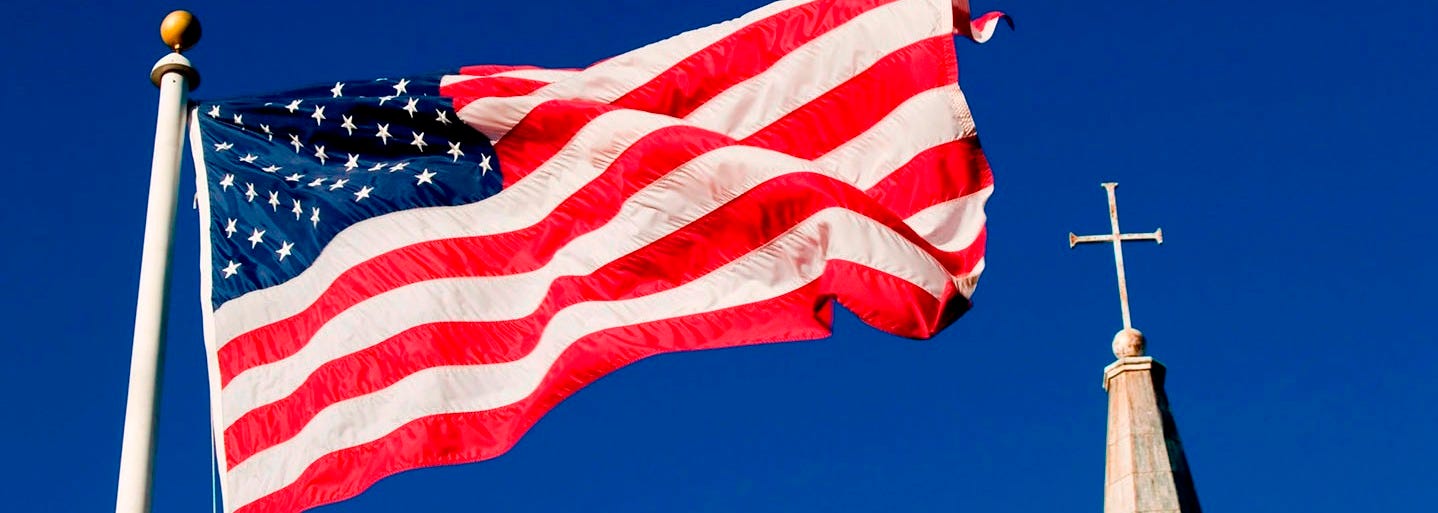
Loving your country is good, and faith can play a part in public life. But there is a temptation today that dresses itself up in Christ’s name: Christian nationalism, which ties faith to who belongs in this country and who gets to run it. The same pull toward using faith for power can show up in the Church and in our relationships, including in how women’s judgment and voices are treated.
What kind of king? (Bridging our worlds)
Upcoming Events
December 3, 2026, 6:00 PM Eastern Time | Georgetown’s Institute of Politics and Public Service | Washington, DC. An In-Person and Livestreamed Public Dialogue on Faith and the Faithful in the 2026 Midterms: What Happened, Why, and What Now?
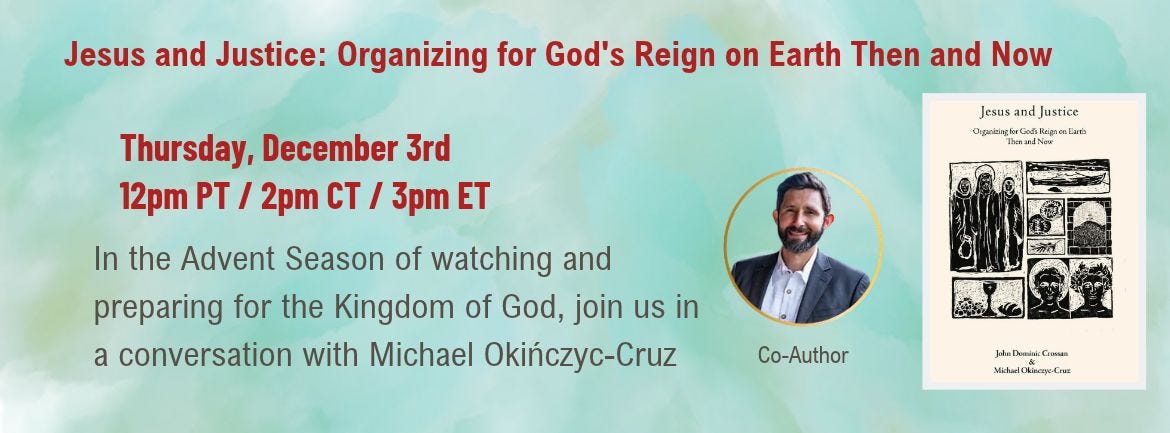
December 3, 2026, 3:00 PM Eastern Time | Collaborative for Catholic Organizing | Jesus and Justice offers a powerful spiritual and theological framework for confronting contemporary injustice. It presents the life of the historical Jesus as a bold and transformative call to action.
January 31 – February 2, 2027 | Washington, DC. | Catholic Social Ministry Gathering | Builders of Communion, Committed to Justice

Cardijn Associates USA
Contact
Email: cardijnassociates@gmail.com