The cry of creation
Dear Friends,
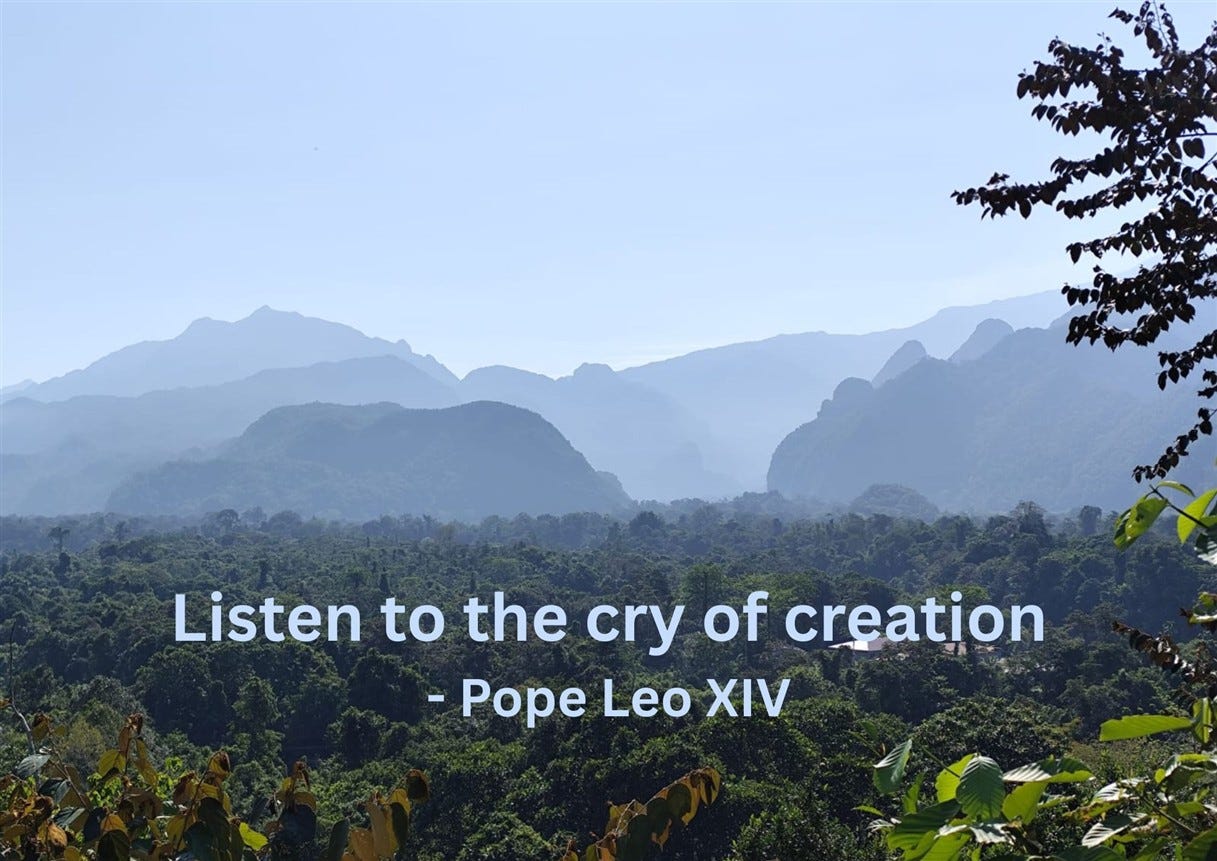
We begin this month with Pope Leo's important message to French scouts inviting them to listen to the "cry of creation" of the environmental crisis the world is facing. As we saw last month, "creation" was also a central theme in Cardijn's own theology.
We carry a report on a significant meeting in Washington DC on Church-labor issues chaired by former International YCW chaplain, Bishop Reginaldo Andrietta, who also worked in Baltimore MD to extend the movement in the US.
National Catholic Reporter writer, Michael Sean Winters, asks whether it's time for a revival of "Catholic Action," or as Cardijn may have preferred to express it, a revival of the lay apostolate of lay people.
Fr Bruce Duncan CSsR continues his analysis of Pope Francis' legacy on economic issues. Speaking of economics, we have the video of our webinar with Dallas Catholic Social Teaching specialist, John Médaille, looking at the threat of economic collapse and the potential for a Catholic-inspired response.
Another Catholic Social Doctrine specialist, Bill Murphy from Chicago, tells the story of Rev. Reynold Hillenbrand, a key figure in the renewal of the liturgy as well as long time national chaplain to the US Young Christian Workers.
We share a review by Claudio Remeseira of Mark Massa SJ’s timely new book, Catholic Fundamentalism in America.
As usual, Pat Branson and Richard Pütz have their own Cardijn-inspired reflections.
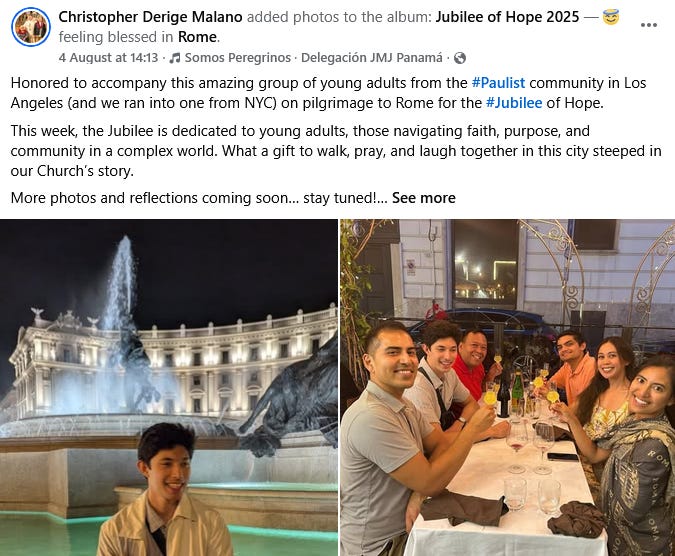
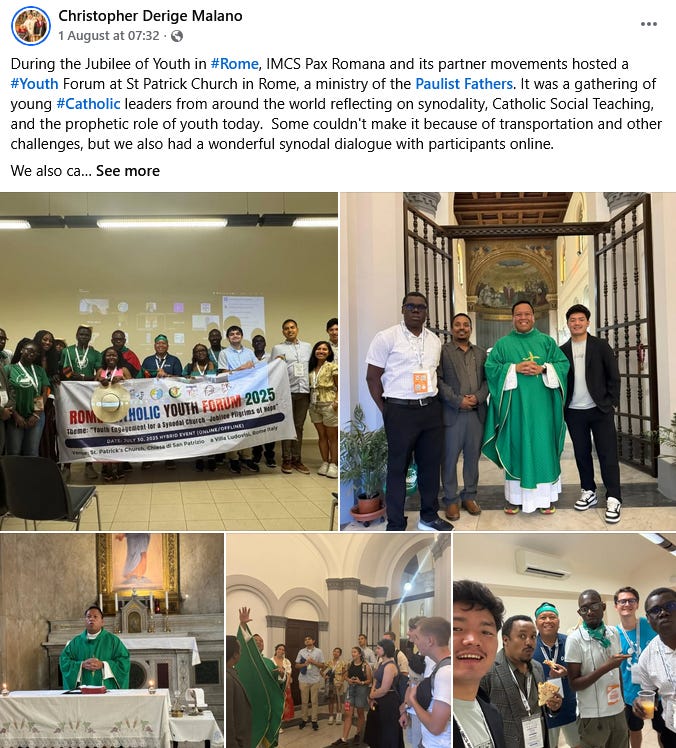
We also have social media posts from recently ordained Paulian Father Chris Malano, who took part in the Jubilee of Youth in Rome in July.
Finally, congratulations to Rudy Dehaney on his recent appointment as a campus minister at the University of Notre Dame, Baltimore.
The Cardijn Associates Team
Pope Leo: Listen to the cry of creation
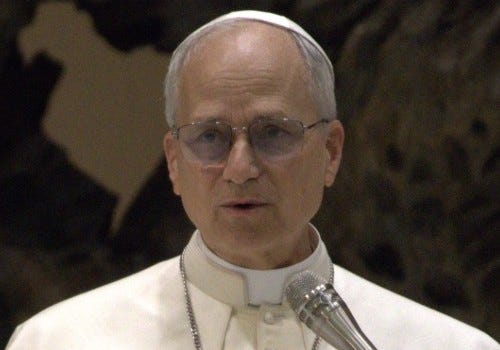
"Today, we are invited to listen attentively to the cry of creation,” Pope Leo wrote in a message to a Scouts and Guides jamboree at Jambville, France. “This urgency is imposed on all humankind, to whom God has entrusted his work.
“Our conscience is strongly challenged by the increasingly serious environmental devastation that is occurring. Faced with pollution and climate change, the loss of biodiversity, the deterioration of life and social degradation, global inequalities, the lack of drinking water and access to energy for many populations, an ecological education is essential for all to reverse the order of things."
READ MORE
Listen to the cry of creation: Leo
Historic meeting strengthens cooperation between labor and Church
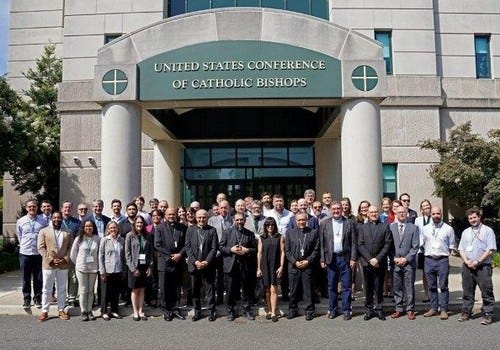
A historic meeting advanced the cooperation agenda between organized labor groups and ecclesial networks on dignified work and care for our common home at the Third Synodal Meeting Fratelli Tutti: North-South Socio-Environmental Dialogue at the headquarters of the United States Conference of Catholic Bishops (USCCB) in Washington, DC on July 28 and 29.
The meeting was led by former International YCW chaplain and YCW extension in Baltimore, MD, Bishop of Jales (Brazil) Reginaldo Andrietta representing the South, Bishop of Brownsville (United States) Daniel Flores representing the North, and Nuncio Juan Antonio Cruz, Permanent Observer of the Holy See to the Organization of American States.
The meeting served to "exchange diverse perspectives among different social actors in the world of organized labor," according to Peruvian Ana Facho Ortiz of the Young Christian Workers of America.
READ MORE
Synodal meeting in US strengthens cooperation between labor groups and Church (Vatican News)
Prospective: Reviving Catholic Action?
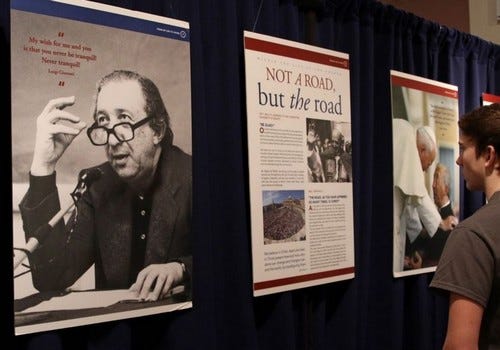
In 2015, American priest, Fr Bruce Nieli issued "a call to retrieve and renew Catholic Action in our time and examine some of the theoretical issues that could help achieve a revival," writes Michael Sean Winters in a three-part series in the US National Catholic Reporter.
"As Nieli notes, the movement started in the late 19th century to combat rampant anti-clericalism, but in the 20th century, it took on a different trajectory. Catholic Action became the effort of Catholic laity, working with the hierarchy and local clergy, to bring Catholic social teaching into the public square. It involved everything from community organizing along the lines of the Back of the Yards Council in Chicago to the Legion of Mary to Cursillo and to the Young Trade Unionists.
"Catholic Action, as Nieli wrote, laid some of the groundwork for the emphasis on the role of the laity that emerged at the 1962-65 Second Vatican Council, but there has been "a subsequent lull" since then.
"This is counterintuitive. If the council called for increased lay participation, why did Catholic Action not grow?
READ MORE
Looking for better ways to evangelize than posting on social media (National Catholic Reporter)
To revive the Catholic Action movement, don't leave dogma at the door (National Catholic Reporter)
Where to start in reviving Catholic Action (National Catholic Reporter)
Retrospective: The legacy of Pope Francis Part II: Signs of hope
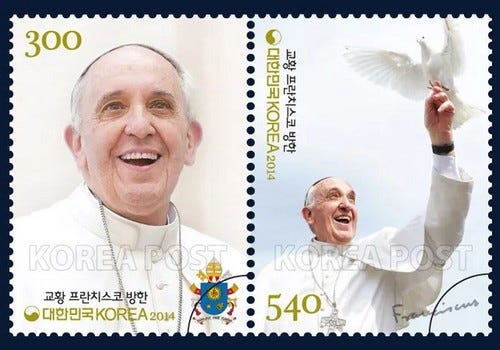
In an address to the president of the UN General Assembly and finance ministers of various nations on 27 May 2019, Pope Francis again warned that the world was heading “towards disaster” from greenhouse gases, writes Fr. Bruce Duncan CSsR in the second instalment of his reflection on the legacy of the late pontiff.
He blamed “the idolatry of money, along with the corruption of vested interests. We still reckon as profit what threatens our very survival”. On 9 June, he again lamented the slow progress to achieve the SDGs. A few days later, on 14 June, he appealed to executives from leading energy companies to help avert “a climate emergency”, and said carbon pricing was “essential”.
READ MORE
The legacy of Pope Francis in an unjust world: Part 2 (Cardijn Reflections)
History: Remembering Msgr. Reynold Hillenbrand
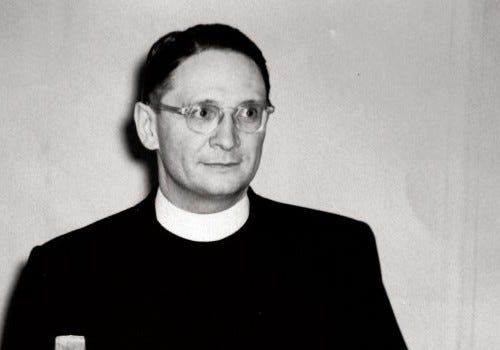
Rev. Reynold Hillenbrand (1904-1979), helped make especially the Catholic Archdiocese of Chicago and—to differing extents over time Mundelein seminary—a locus of liturgical renewal and social Catholicism in the United States during the decades leading up to and immediately following the Second Vatican Council, writes Bill Murphy.
Hillenbrand’s foresight, Bill continues, was greatly aided by his participation in the movements growing out of the work of Joseph Cardinal Cardijn, including the Young ChristianWorkers (YCW), which employed Cardijn’s see-judge-act model of social engagement.
As opposed to railing against the evils of liberalism from a comfortable perch in academia as some Catholics have done, those like Hillenbrand who instead followed the social Catholic path of Christian humanism and solidarity in the struggle for human dignity learned thereby to love their neighbors by participating in the modern world of constitutional democratic states as Catholic Social Doctrine teaches.
READ MORE
Remembering Msgr. Reynold Hillenbrand (Better Politics)
Video: Economic collapse or cooperation?

Catholic Social Teaching specialist John Médaille presented our August webinar co-hosted with the Australian Cardijn Institute on 8 August 2025.
The subject was “Economic collapse or cooperation?”
“I begin by making an assertion that the American economy has been in a state of near collapse since 2008 and has been sustained, that is, collapse avoided, only thru vast injections of government money into the economy,” John Médaille began.
Concluding, he suggested that any practical reform will have to have four
goals in mind:
1. Re-moralize the markets;
2. Re-localize the economy;
3. Re-capitalize the poor and middle class;
4. Re-center the economy around the family and the community.
READ JOHN’S PAPER
John Médaille, ACI Webinar Presentation August 2025
WATCH THE VIDEO HERE
Book Review: Catholic Fundamentalism in America by Mark S. Massa, S.J.
Fundamentalism has historically been associated with the Evangelical tradition in the US, writes Claudio Remeseira. Its classic historical reconstruction is George Mardsen’s Fundamentalism and American Culture, first published in 1980. According to Mardsen, Protestant Fundamentalism was born in the aftermath of the first World War, driven by militant opposition to the modern world — against both the theological current known as Modernism and the secular changes taking place at that time in the wider culture.
The most notorious target of this movement was Darwin’s theory of evolution. Early Fundamentalists were influenced by the revivalist establishment of the 19th century and other related traditions, like pietism, the holiness movements, and millenarianism, among others.
Mark Massa’s book is the first major work to apply the concept of Fundamentalism to Catholicism. Massa defines Fundamentalism in general as the “far-right wing of believers who want to break away from mainstream churches and form a purer, smaller, self-selective group.” These are basically sectarian traits. In fact, what sets Fundamentalists apart from traditional Christian conservatives, Protestant and Catholic alike, is their sectarianism, which is often fueled by an apocalyptic rhetoric.
READ MORE
The Catholic Puritans: Catholic Fundamentalism in America (Where Peter Is)
Hiroshima: "Give me leaders and I will raise the world"
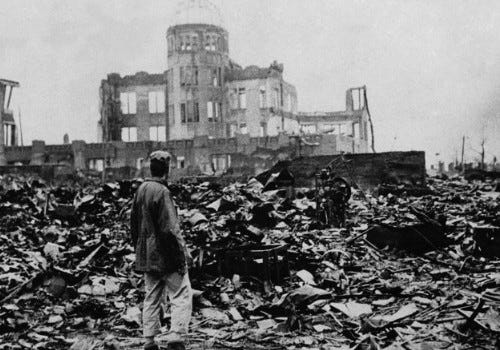
In Hiroshima last week, writes Richard Pütz, urgent peace delegations that include students, faculty, and staff from colleges and universities are gathering. Bishops from South Korea, Japan, and the United States are issuing a joint proposal on nuclear weapons, emphasizing the pressing need for their abolition. Cardinal McElroy: "Nuclear weapons must be abolished from the face of the earth."
Thomas Merton's writings, especially "The Root of War is Fear," give us, as members of JOC, the chance to broaden our education, not just academically, but also to friends and neighbors who sit with us in a pew, live in our neighborhoods, and struggle to pay their bills.
READ MORE
"Give me leaders and I will raise the world" (Cardijn Reflections)
Gospel: When God goes fishing…
The Church has been celebrating the Jubilee of Youth, writes Pat Branson. Recently, Pope Leo XIV addressed a gathering of French scouts and guides. He said, “You are young, you are full of ideas and enthusiasm. You want to conquer the world not to subdue it, but to serve the life that comes from God,”
As I reflected on the message of hope and the challenge, Pope Leo gave to his young audience, I was prompted to revisit Pope Francis’ encyclical Laudato Si’, which he addressed to “every person living on this planet” (#3), and through which he attempted to “enter into dialogue with all people about our common home”.
READ MORE
When God goes fishing… (Cardijn Reflections)
News briefs and social media
Youth Jubilee in Rome