
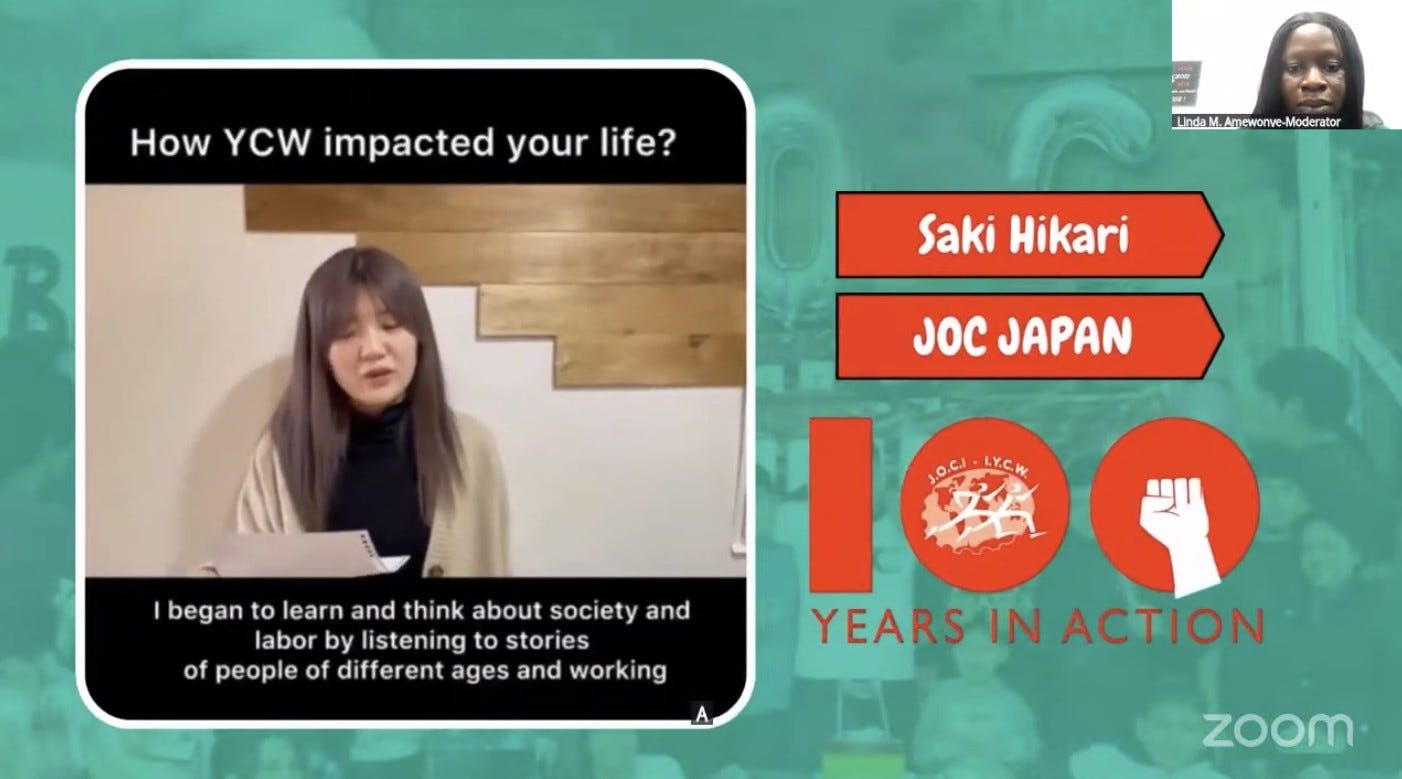
Experiencing the Passion
Dear Friends,
We begin this issue with a powerful article by Washington DC Auxiliary Bishop Evelio Menjivar, who tells us that migrants and refugees are experiencing the Passion of Jesus Christ as a consequence of US government policies. And he calls on government workers to follow their consciences and resist those policies.
On a happier note, we share an article by Port of Spain, Trinidad Bishop Charles Grayson Gordon, who identifies what he characterises as "the four marks" of a synodal Church.
This month, we also continue to highlight the centenary of the foundation of the Young Christian Workers movement in Belgium in 1925, which officially opened in Brussels on April 12 (photo above).
Watch the video here:
For the occasion, we've also managed to resurrect several historical items, including audio of Cardijn and a video of the International YCW World Council in Adelaide in 1991 by digitising and posting it on YouTube.
We also have an article highlighting the IYCW's 1965 proposal for a "lay senate" in Rome, a proposal that seems to foreshadow the kind of synodal church Pope Francis is promoting.
Once again, Pat Branson and Richard Pütz offer their usual thought-provoking reflections.
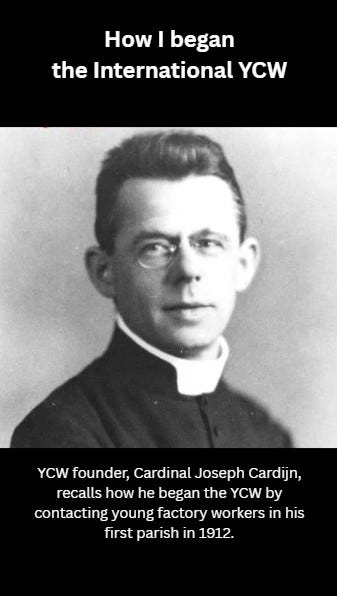
And finally we present an audio extract from Cardijn's talk in Australia in 1966 explaining how he first began to build the YCW in his original parish of Notre Dame at Laeken in 1912.
The Cardijn Associates Team
US Church needs more Oscar Romeros
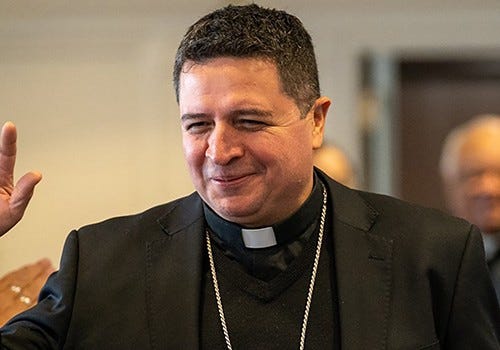
Recalling the example of Saint Oscar Romero, Washington DC Auxiliary Bishop Evelio Menjivar has called on US government workers to “reclaim your consciences” and refuse to take part in the violation of the human rights of migrants and refugees.
“The Church remembers Christ’s suffering, death, and resurrection of Jesus in a spiritual and sacramental way during Holy Week and the Easter Triduum, but some people actually experience the Passion in a tangible and personal way in their very lives,” Bishop Menjivar wrote in the Catholic Standard. “Among them are members of the immigrant and refugee communities today.”
READ MORE
US Church needs more Oscar Romeros: Washington bishop
The four signs of a synodal Church
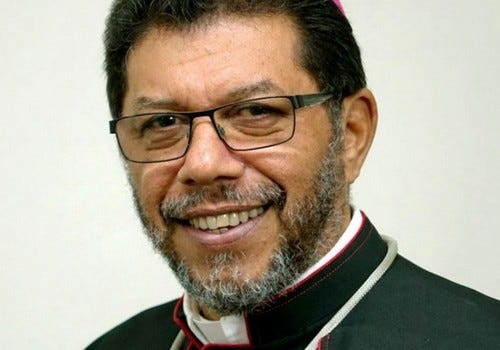
What are the most vital “marks” or attributes of a synodal church as revealed in final document of the Synod on Synodality, asks Bishop Charles Grayson Gordon of Port of Spain, Trinidad.
"If synodality is indeed a constitutive dimension of the church, then we should expect to observe certain attributes when synodality is flourishing and maturing," he writes.
"Reflecting on the final document of the synod, I propose four marks of a synodal church: relating, listening, discerning and self-emptying."
READ MORE
The four signs of a truly synodal church (America Magazine)
Video: International YCW World Council, Adelaide, 1991
In November-December 1991, the Australian YCW hosted young worker leaders from 40 countries for the 6th World Council of the International YCW.
You can watch it now in full on YouTube along with several clips from IYCW founding secretary, Marguerite Fiévez.
WATCH THE VIDEO AND CLIPS
IYCW World Council, Adelaide 1991
Gospel: What is the place of the Gospel in the YCS?

I have had a long association with the Young Christian Students Movement (YCS) in Australia, but I am still unsure of the place of the Gospel in the life of the YCS, writes Pat Branson.
I think there are two reasons for my uncertainty: first, the students who taught me to Review, used the questions “What does your faith say? What would Jesus do in this situation?”
In the Judge section of the Review of Life, however, they did not show much knowledge of the Gospels, or of Church teaching beyond what little they picked up, probably from going to Mass, from sitting in RE classes at school, from their families, and from being in a Review group.
READ MORE
Your father Abraham saw my day and was glad (Gospel Enquiries)
Reflection: What world are we leaving our children?

Joseph Cardijn exemplified patterns evident in the elements of the Rule of St Benedict through his commitment to community, discernment, and action - principles that resonate deeply with Benedictine spirituality, writes Richard Pütz.
Although the Rule did not directly influence Cardijn, his work and methodology align with its values in several ways.
READ MORE
How did Joseph Cardijn exemplify the Rule of St. Benedict? (Cardijn Reflections)
History: The fight for a lay senate… in Rome
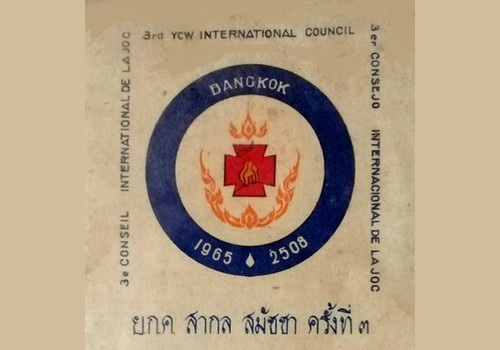
In this article, Stefan Gigacz presents a video is extracted from a recording of a report by Australian delegates from the International YCW World Council in Bangkok, Thailand, in December 1965.
It illustrates that lay leaders were already battling to build a church based on fraternal not paternal dialogue between clergy and laity, or, as Pope has characterised it, a synodal church.
READ MORE
The fight for a lay senate… in Rome (Synodal Reflections)
News briefs and social media
Video: How I started the YCW: Joseph Cardijn
In this video extract from a talk in Australia in 1966, Cardijn recalls how he first began to contact young workers in his home parish of Notre Dame at Laeken, Belgium, in 1912.
WATCH HERE
Editorial Note: The purpose of the Cardijn Associates Newsletter is to share information and promote discussion. Citing or linking to articles does not imply any endorsement by Cardijn Associates of the authors' views.
Cardijn Associates USA
Contact
Email: cardijnassociates@gmail.com